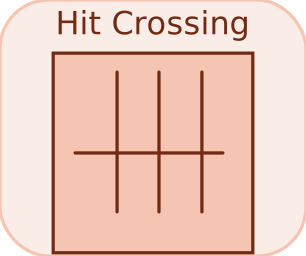
Sort 1 au pas ou l entree franchit HitCrossingOffset.
Comme l'entree est lue en phase OUTPUT, pilotez ce bloc depuis une source plutot qu'a travers un bloc ALGEBRAIC transparent (dont la sortie serait en retard d'un pas).
Generation de code : prise en charge pour C et Rust.
Manifestmodules/nflow_blocks/libraries/nonlinear/library.json
{
  "id": "builtin.nonlinear",
  "title": "Non-Linear",
  "version": "1.0.0",
  "format": "nflow-2",
  "metadata": {
    "author": "Allan CORNET",
    "created": "2026-03-21",
    "tool": "Nelson nflow"
  },
  "comment": "Blocks for non-linearities",
  "license": "LGPL-3.0",
  "builtin": true,
  "blocks": [
    {
      "type": "saturation",
      "icon": "saturation.svg",
      "label": "Saturation",
      "phases": [
        "ALGEBRAIC"
      ],
      "width": 80,
      "height": 80,
      "inputs": [
        {
          "x": 0,
          "y": 40,
          "side": "left"
        }
      ],
      "outputs": [
        {
          "x": 80,
          "y": 40,
          "side": "right"
        }
      ],
      "defaultParams": {
        "LowerLimit": -1,
        "UpperLimit": 1
      },
      "render": {
        "type": "image",
        "src": "saturation.svg"
      }
    },
    {
      "type": "hysteresis",
      "label": "Relay",
      "icon": "hysteresis.svg",
      "phases": [
        "INIT",
        "OUTPUT",
        "UPDATE"
      ],
      "width": 80,
      "height": 80,
      "inputs": [
        {
          "x": 0,
          "y": 40,
          "side": "left"
        }
      ],
      "outputs": [
        {
          "x": 80,
          "y": 40,
          "side": "right"
        }
      ],
      "defaultParams": {
        "uHigh": 1,
        "uLow": -1,
        "yHigh": 1,
        "yLow": 0
      },
      "render": {
        "type": "image",
        "src": "hysteresis.svg"
      }
    },
    {
      "type": "rate",
      "label": "Rate Lim.",
      "icon": "rate.svg",
      "phases": [
        "INIT",
        "OUTPUT",
        "UPDATE"
      ],
      "width": 80,
      "height": 80,
      "inputs": [
        {
          "x": 0,
          "y": 40,
          "side": "left"
        }
      ],
      "outputs": [
        {
          "x": 80,
          "y": 40,
          "side": "right"
        }
      ],
      "defaultParams": {
        "RisingSlewLimit": 1,
        "FallingSlewLimit": 1
      },
      "render": {
        "type": "image",
        "src": "rate.svg"
      }
    },
    {
      "type": "backlash",
      "label": "Backlash",
      "icon": "backlash.svg",
      "phases": [
        "INIT",
        "OUTPUT",
        "UPDATE"
      ],
      "width": 80,
      "height": 80,
      "inputs": [
        {
          "x": 0,
          "y": 40,
          "side": "left"
        }
      ],
      "outputs": [
        {
          "x": 80,
          "y": 40,
          "side": "right"
        }
      ],
      "defaultParams": {
        "BacklashWidth": 1
      },
      "render": {
        "type": "image",
        "src": "backlash.svg"
      }
    },
    {
      "type": "deadZone",
      "label": "Dead Zone",
      "icon": "deadZone.svg",
      "phases": [
        "ALGEBRAIC"
      ],
      "width": 80,
      "height": 80,
      "inputs": [
        {
          "x": 0,
          "y": 40,
          "side": "left"
        }
      ],
      "outputs": [
        {
          "x": 80,
          "y": 40,
          "side": "right"
        }
      ],
      "defaultParams": {
        "LowerValue": -1,
        "UpperValue": 1
      },
      "render": {
        "type": "image",
        "src": "deadZone.svg",
        "svgMode": "element",
        "preserveAspectRatio": "none",
        "x": 0,
        "y": 0,
        "width": 80,
        "height": 80
      }
    },
    {
      "type": "quantizer",
      "label": "Quantizer",
      "icon": "quantizer.svg",
      "phases": [
        "ALGEBRAIC"
      ],
      "width": 80,
      "height": 80,
      "inputs": [
        {
          "x": 0,
          "y": 40,
          "side": "left"
        }
      ],
      "outputs": [
        {
          "x": 80,
          "y": 40,
          "side": "right"
        }
      ],
      "defaultParams": {
        "QuantizationInterval": 1
      },
      "render": {
        "type": "image",
        "src": "quantizer.svg",
        "svgMode": "element",
        "preserveAspectRatio": "none",
        "x": 0,
        "y": 0,
        "width": 80,
        "height": 80
      }
    },
    {
      "type": "hitCrossing",
      "icon": "hitCrossing.svg",
      "label": "Hit Crossing",
      "phases": [
        "INIT",
        "OUTPUT",
        "UPDATE"
      ],
      "width": 80,
      "height": 80,
      "inputs": [
        {
          "x": 0,
          "y": 40,
          "side": "left"
        }
      ],
      "outputs": [
        {
          "x": 80,
          "y": 40,
          "side": "right"
        }
      ],
      "defaultParams": {
        "HitCrossingOffset": 0,
        "HitCrossingDirection": "either"
      },
      "render": {
        "type": "image",
        "src": "hitCrossing.svg"
      }
    },
    {
      "type": "coulombViscousFriction",
      "label": "Coulomb & Viscous Friction",
      "icon": "coulombViscousFriction.svg",
      "phases": [
        "ALGEBRAIC"
      ],
      "width": 80,
      "height": 80,
      "inputs": [
        {
          "x": 0,
          "y": 40,
          "side": "left"
        }
      ],
      "outputs": [
        {
          "x": 80,
          "y": 40,
          "side": "right"
        }
      ],
      "defaultParams": {
        "Gain": 1,
        "Offset": 1
      },
      "render": {
        "type": "image",
        "src": "coulombViscousFriction.svg",
        "svgMode": "element",
        "preserveAspectRatio": "none",
        "x": 0,
        "y": 0,
        "width": 80,
        "height": 80
      }
    }
  ]
}
Runtimemodules/nflow_blocks/src/cpp/nonlinear/hitCrossing.cpp
//=============================================================================
// Copyright (c) 2016-present Allan CORNET (Nelson)
//=============================================================================
// This file is part of Nelson.
//=============================================================================
// LICENCE_BLOCK_BEGIN
// SPDX-License-Identifier: LGPL-3.0-or-later
// LICENCE_BLOCK_END
//=============================================================================
// hitCrossing: detects when the (scalar) input reaches HitCrossingOffset in the
// configured direction and outputs 1.0 on the step where the crossing happens,
// else 0.0. Direction is "rising", "falling" or "either" (default). Stateful:
// the previous input (relative to the offset) is held so a straddle can be
// detected. The first step has nothing to straddle, so it fires only when the
// input STARTS on the offset - which is a hit, and the only one that instant
// can report. C / Rust code generation.
//=============================================================================
#include "SimEngineTypes.hpp"
#include "BlockRegistry.hpp"
#include "FieldNames.hpp"
#include "NFlowBlockDescriptor.hpp"
#include <cmath>
#include <string>
#include "nonlinear_blocks.hpp"
//=============================================================================
namespace Nelson {
namespace NFlow {
    //=============================================================================
    // Direction codes: 0 = either, 1 = rising, 2 = falling.
    static int
    hcDirection(const nflow::BlockDescriptor& bd)
    {
        const std::string d = bd.paramStr("HitCrossingDirection", "either");
        if (d == "rising") {
            return 1;
        }
        if (d == "falling") {
            return 2;
        }
        return 0;
    }
    //=============================================================================
    static bool
    hcHit(double prev, double cur, int dir)
    {
        const bool rising = (prev < 0.0 && cur >= 0.0);
        const bool falling = (prev > 0.0 && cur <= 0.0);
        if (dir == 1) {
            return rising;
        }
        if (dir == 2) {
            return falling;
        }
        return rising || falling;
    }
    //=============================================================================
    bool
    handleHitCrossing(SimCtx& ctx, const Block& b, Phase phase)
    {
        auto& st = getState(ctx, b.nid);
        if (phase == Phase::INIT) {
            st.scalar = 0.0; // previous input relative to the offset
            st.scalar2 = 0.0; // primed flag (0 until the first step is seen)
            st.output = 0.0;
            return false;
        }
        nflow::BlockDescriptor bd(b, ctx.variables);
        const double off = bd.paramDouble("HitCrossingOffset", 0.0);
        if (phase == Phase::OUTPUT) {
            const double cur = getInput(ctx, b.nid, 0, 0.0) - off;
            double out = 0.0;
            if (st.scalar2 != 0.0) {
                out = hcHit(st.scalar, cur, hcDirection(bd)) ? 1.0 : 0.0;
            } else if (cur == 0.0) {
                // Starts on the offset: a hit, whatever direction was asked for
                // (there is no previous sample to give the crossing a sign).
                out = 1.0;
            }
            setOutput(ctx, b.nid, out);
            return false;
        }
        if (phase == Phase::UPDATE) {
            st.scalar = getInput(ctx, b.nid, 0, 0.0) - off;
            st.scalar2 = 1.0;
            return false;
        }
        return false;
    }
    //=============================================================================
    static std::string
    hcCondC(const BlockCodegenArgs& a, const std::string& c, int dir)
    {
        const std::string p = "s->hc_prev_" + a.id;
        const std::string rising = "(" + p + " < 0.0 && " + c + " >= 0.0)";
        const std::string falling = "(" + p + " > 0.0 && " + c + " <= 0.0)";
        if (dir == 1) {
            return rising;
        }
        if (dir == 2) {
            return falling;
        }
        return "(" + rising + " || " + falling + ")";
    }
    //=============================================================================
    BlockCodegenTemplate
    getCodeGenCHitCrossing()
    {
        BlockCodegenTemplate t;
        t.emitState = [](const BlockCodegenStateArgs& a) {
            a.addState("hc_prev_" + a.id, "0.0", "");
            a.addState("hc_primed_" + a.id, "0.0", "");
        };
        t.emitStep = [](const BlockCodegenArgs& a) {
            nflow::BlockDescriptor bd(*a.block, *a.variables);
            const std::string off = a.fmt(bd.paramDouble("HitCrossingOffset", 0.0));
            const int dir = hcDirection(bd);
            const std::string c = "(" + a.in[0] + " - " + off + ")";
            // Before the first latch, a hit is the input STARTING on the offset.
            a.line("out_" + a.id + " = (s->hc_primed_" + a.id + " != 0.0) ? ((" + hcCondC(a, c, dir)
                + ") ? 1.0 : 0.0) : ((" + c + " == 0.0) ? 1.0 : 0.0);");
            a.line("s->hc_prev_" + a.id + " = " + c + ";");
            a.line("s->hc_primed_" + a.id + " = 1.0;");
        };
        return t;
    }
    //=============================================================================
    static std::string
    hcCondRust(const BlockCodegenArgs& a, const std::string& c, int dir)
    {
        const std::string p = "s.hc_prev_" + a.id;
        const std::string rising = "(" + p + " < 0.0_f64 && " + c + " >= 0.0_f64)";
        const std::string falling = "(" + p + " > 0.0_f64 && " + c + " <= 0.0_f64)";
        if (dir == 1) {
            return rising;
        }
        if (dir == 2) {
            return falling;
        }
        return "(" + rising + " || " + falling + ")";
    }
    //=============================================================================
    BlockCodegenTemplate
    getCodeGenRustHitCrossing()
    {
        BlockCodegenTemplate t;
        t.emitState = [](const BlockCodegenStateArgs& a) {
            a.addState("hc_prev_" + a.id, "0.0_f64", "");
            a.addState("hc_primed_" + a.id, "0.0_f64", "");
        };
        t.emitStep = [](const BlockCodegenArgs& a) {
            nflow::BlockDescriptor bd(*a.block, *a.variables);
            const std::string off = a.fmt(bd.paramDouble("HitCrossingOffset", 0.0));
            const int dir = hcDirection(bd);
            const std::string c = "(" + a.in[0] + " - " + off + ")";
            // Before the first latch, a hit is the input STARTING on the offset.
            a.line("out_" + a.id + " = if s.hc_primed_" + a.id + " != 0.0_f64 { if "
                + hcCondRust(a, c, dir) + " { 1.0_f64 } else { 0.0_f64 } } else if " + c
                + " == 0.0_f64 { 1.0_f64 } else { 0.0_f64 };");
            a.line("s.hc_prev_" + a.id + " = " + c + ";");
            a.line("s.hc_primed_" + a.id + " = 1.0_f64;");
        };
        return t;
    }
    //=============================================================================
} // namespace NFlow
} // namespace Nelson
//=============================================================================